


China Top Tripollar Radio Frequency Manufacturers?
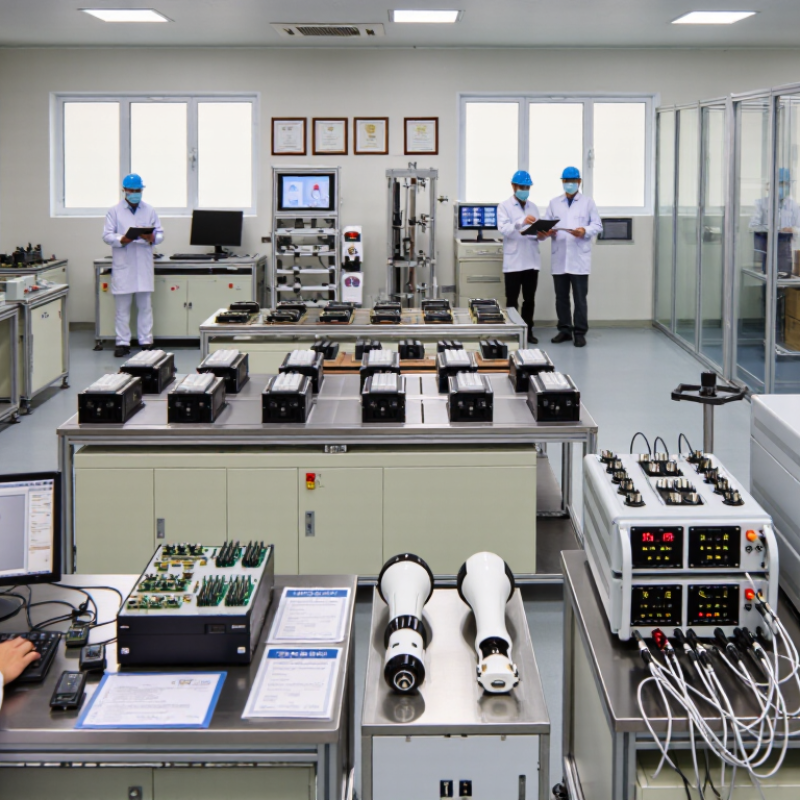
Choosing among China’s top tripollar radio frequency manufacturers requires more than comparing factory photographs or advertised wattage. Buyers need to examine engineering records, production experience, clinical documentation, and after-sales support. A reliable supplier should explain electrode configuration, operating frequency, temperature control, treatment depth, and safety monitoring in clear language. Vague claims deserve caution.
Dr. Shimon Eckhouse, founder of Pollogen and a recognized figure in aesthetic-device development, has emphasized, “Technology must be safe, effective, and easy to use.” This principle remains practical when reviewing tripollar radio frequency manufacturers. A capable company should provide ISO 13485 evidence, relevant product certifications, documented quality procedures, and traceable component information. Factory audits also matter. A polished showroom is not enough.
Look closely at real manufacturing details. Ask whether handpieces receive calibration before shipment. Check how devices manage skin temperature during a six-minute treatment. Request stability data, user training materials, warranty terms, and service response times. Strong manufacturers can discuss these points without hiding behind marketing language. Some suppliers may offer impressive prototypes but lack consistent mass production. That difference is easy to miss.
The market is not perfectly transparent. Even experienced buyers can overvalue low prices or attractive specifications. I would compare at least three factories, inspect sample units, and request independent testing where possible. The best partner may not be the largest manufacturer. It may be the company that documents limitations honestly, improves weak designs, and supports distributors after delivery. That judgment takes time, and sometimes the first shortlist is wrong.
What Is Tripollar Radio Frequency Technology?
Tripolar radio frequency technology uses three electrodes to deliver controlled electromagnetic energy into the skin. The energy creates gentle heat within targeted tissue, rather than heating only the surface. This warmth may support collagen contraction and gradual collagen remodeling. The treatment area can feel warm, like a small stone warmed by sunlight.
In professional use, operators adjust power, duration, and movement speed for each skin type. A quality device should monitor temperature, maintain stable energy output, and include clear safety controls. Reliable manufacturers also provide electrical testing, user training, maintenance guidance, and evidence that matches local regulatory requirements. These details matter more than attractive product language.
The word “tripolar” can sound more precise than it is. Different devices may use different electrode spacing, frequencies, and temperature limits. Results can vary with skin condition, treatment technique, and the number of sessions. I have found that comfort does not always indicate effectiveness; a very hot sensation may signal poor control, not better performance. RF treatment is not suitable for everyone, especially people with certain implanted electronic devices or conditions requiring medical advice. Qualified professionals should review the device instructions and the client’s health history before treatment. Just three poles. Different engineering.
China Top Tripollar Radio Frequency Manufacturers? - What Is Tripollar Radio Frequency Technology?
| Data Dimension | Technical Information | Why It Matters When Evaluating a Manufacturer | Recommended Verification Evidence |
|---|---|---|---|
| Technology Definition | Tripolar radio frequency uses three electrodes to create a controlled alternating electric field in the target tissue. The energy path is generally more localized than a simple monopolar configuration. | The electrode arrangement influences energy distribution, treatment depth, comfort, and thermal uniformity. | Electrode layout drawings, circuit diagrams, treatment-head specifications, and independent performance testing. |
| Operating Principle | Radio-frequency current produces resistive heating as it passes through tissue. The resulting heat is controlled by power, exposure time, electrode geometry, contact quality, and tissue impedance. | A manufacturer must demonstrate stable energy delivery rather than relying only on nominal output values. | Output-power tests, impedance-monitoring data, thermal maps, and repeatability reports. |
| Common Frequency Range | Aesthetic RF systems commonly operate in the radio-frequency range from hundreds of kilohertz to several megahertz. The exact frequency is device-specific and should not be assumed from the term “tripolar.” | Frequency affects electrical impedance, field distribution, regulatory classification, and circuit design. | Measured frequency, tolerance limits, waveform information, and test reports from calibrated equipment. |
| Energy Delivery | Energy delivery is usually described by output power, power density, treatment time, duty cycle, and contact area. These values are not interchangeable. | Comparable specifications help buyers assess treatment consistency and operating cost. | Full electrical specifications, calibrated output measurements, and treatment protocol documentation. |
| Temperature Control | Temperature may be monitored by a skin-contact sensor, an internal sensor, infrared measurement, or a combination of methods. Closed-loop control can adjust or stop RF output when a limit is reached. | Accurate temperature feedback reduces the risk of excessive heating and improves treatment repeatability. | Sensor accuracy, control logic, alarm thresholds, over-temperature testing, and calibration records. |
| Treatment Applications | Non-invasive RF systems are commonly positioned for temporary skin-warming, cosmetic skin appearance improvement, and body-contouring-related applications, subject to the device’s intended use. | Marketing claims must remain consistent with the approved or declared intended purpose in the target market. | Intended-use statement, user manual, clinical evaluation, contraindications, and market-specific regulatory documents. |
| Treatment-Head Design | Important design factors include electrode spacing, contact area, insulation, surface material, ergonomic shape, and replaceable or detachable components. | The treatment head directly affects comfort, field concentration, hygiene, and serviceability. | Mechanical drawings, material declarations, ingress or cleaning instructions, and durability test results. |
| Safety Features | Typical safety functions include skin-contact detection, over-temperature protection, excess-current protection, treatment-time limits, fault alarms, and emergency shutoff. | Safety functions should operate independently where appropriate and be validated under foreseeable fault conditions. | Risk-management file, fault-condition testing, alarm verification, electrical safety reports, and software validation records. |
| Quality Management | A medical-device-oriented quality system commonly includes design controls, supplier management, production traceability, corrective actions, complaint handling, and change control. | A documented quality system lowers the risk of inconsistent batches and uncontrolled design changes. | Current ISO 13485 certificate, scope confirmation, audit records, batch traceability, and quality agreement. |
| Electrical and EMC Compliance | Relevant evaluation commonly covers basic electrical safety, essential performance, electromagnetic compatibility, leakage current, insulation, grounding, and abnormal operation. | RF equipment can both emit and be affected by electromagnetic energy, making EMC testing particularly important. | Applicable IEC 60601-series test reports, declaration of conformity, EMC results, and product-label review. |
| Biocompatibility and Materials | Materials that contact intact skin should be selected and assessed for intended duration and use conditions. Surface finishes must also tolerate the specified cleaning process. | Material safety affects skin compatibility, hygiene, product life, and regulatory acceptance. | Material declarations, biocompatibility assessment, cleaning validation, and chemical-resistance testing. |
| Clinical and Performance Evidence | Evidence should identify the exact device configuration, treatment protocol, target population, endpoints, follow-up period, adverse events, and limitations. | Results from one RF configuration cannot automatically be applied to another configuration. | Clinical evaluation report, human-use study, standardized photography, objective measurements, and adverse-event records. |
| After-Sales Capability | A reliable supplier should provide operator training, preventive-maintenance procedures, spare parts, repair support, software-update control, and complaint-response timelines. | Service capability influences uptime, user safety, warranty cost, and long-term customer satisfaction. | Service-level agreement, spare-parts list, warranty terms, training records, repair workflow, and response-time commitments. |
Note: Technical specifications, regulatory status, and permitted claims vary by device model and target market. Manufacturer information should be confirmed against current product documentation and independent test records.
Related Posts
-
Top 10 TriPollar Radiofrequency Machines for Global Buyers
-

What is Radio Frequency Treatment and How Does It Work?
-

What is Radio Frequency Facial and How Does It Work?
-

How to Achieve Smooth Skin with Radiofrequency Facial Treatments?
-

China Top 10 Radiofrequency Facial Machine Manufacturers
-
7 Best Tripolar RF Machines for Global Buyers?


