Why Is Footwear Inspection Essential for Global Buyers?
For global buyers, Footwear Inspection is more than a final check before shipment. It is a practical way to reduce quality uncertainty across distant factories, materials, and production teams. A shoe may look attractive in a catalog yet fail after several days of walking. Its sole may separate. Its stitching may loosen. Its size markings may not match the approved sample.
Quality-management expert W. Edwards Deming offered a lasting warning: “You cannot inspect quality into a product; it is already there.” This principle matters in footwear sourcing. Inspection cannot repair weak design or poor materials. However, it can reveal problems before containers leave the factory. Inspectors compare finished shoes with approved samples, purchase specifications, and measurable tolerances. They examine color consistency, bonding, stitching density, outsole hardness, dimensions, surface defects, packaging, and labeling. Small details matter. A crushed toe box can suggest careless handling. Uneven adhesive can become a customer complaint.
Inspection is not perfect.
Sampling has limits. A few checked pairs cannot represent every carton. That uncomfortable fact deserves attention. Global buyers should combine factory assessments, in-line checks, final inspections, laboratory testing, and clear corrective actions. They should also retain inspection records and product photos. These records support better decisions during repeated orders.
Reliable Footwear Inspection creates evidence, not false confidence. It helps buyers identify recurring defects, challenge vague factory promises, and protect customer experience. The strongest process is collaborative, documented, and open to revision. Quality improves when inspection findings return to design, production, and supplier training.
Global Footwear Trade: 24.3 Billion Pairs Produced Worldwide in 2023
In 2023, factories worldwide produced 24.3 billion pairs of footwear. This figure shows the immense scale of global footwear trade. For buyers, a minor defect can spread across thousands of pairs. Inspection is not a ceremonial step. It is a practical control for quality, consistency, and supplier performance.
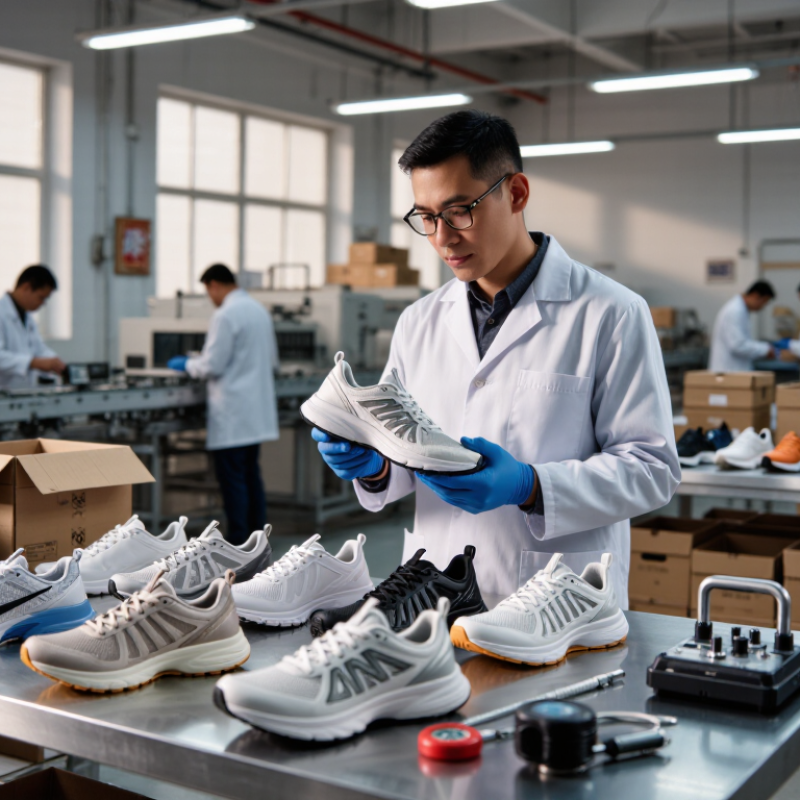
An experienced inspector checks size, shape, stitching, color, materials, and sole bonding. Measurements can reveal uneven sizing before products reach customers. Visual checks may find scratches, glue marks, loose threads, or damaged surfaces. Pull tests can expose weak attachments that look acceptable at first glance. Details matter.
Reliable inspection depends on clear specifications and trained personnel. Inspectors should compare production samples with approved references. They should also examine cartons, labels, protective packing, and product counts. Sampling plans help buyers manage large shipments without checking every pair. Still, no inspection system is flawless. Even experienced inspectors can miss defects under poor lighting or time pressure. That weakness deserves honest review.
Buyers can improve reliability by using inspection records, dated photographs, and signed measurement sheets. Factory visits may reveal workflow problems that final checks cannot show. Repeated defects should trigger corrective action, not just a rejected shipment. A checklist helps, but it cannot replace professional judgment. One overlooked carton can change the quality perception of an entire order.
AQL 1.5, 2.5, and 4.0: The ISO 2859-1 Inspection Framework
Why Is Footwear Inspection Essential for Global Buyers?
Footwear inspection protects buyers from defects that appear after shipment. A loose outsole, uneven stitching, or wrong size marking can create costly returns. Experienced inspectors check materials, workmanship, measurements, labels, packaging, and carton quantities. They compare every pair with the approved reference sample. Small details matter.
ISO 2859-1 provides a structured sampling framework for footwear inspections. AQL 1.5 usually applies to stricter major-defect control. AQL 2.5 is often selected for general workmanship checks. AQL 4.0 allows a broader tolerance for minor defects. These numbers are not defect targets. They support statistical decisions based on lot size, sample size, and acceptance numbers. The inspection plan must define critical, major, and minor defects clearly.
No sampling plan is perfect. I have seen clean-looking uppers hide weak bonding near the toe. Inspectors should flex soles, measure several sizes, and examine pairs under consistent lighting. They should record defect locations with photographs and traceable carton numbers. Buyers also need the exact sampling code and acceptance criteria before production begins. Otherwise, two parties may inspect the same shipment and reach different conclusions. AQL selection should reflect product risk, customer expectations, and past factory performance, not habit alone.
Why Is Footwear Inspection Essential for Global Buyers? - AQL 1.5, 2.5, and 4.0: The ISO 2859-1 Inspection Framework
| Inspection Dimension | ISO 2859-1 Application | AQL 1.5 | AQL 2.5 | AQL 4.0 |
| Standard and purpose | ISO 2859-1 provides lot-by-lot attribute sampling procedures based on AQL values. | Stricter major-defect criterion | Common general-purpose criterion | More tolerant major-defect criterion |
| Illustrative lot size | Finished footwear lot of 3,201–10,000 pairs | Applicable example | Applicable example | Applicable example |
| Inspection level | General Inspection Level II, normal inspection | Code letter L | Code letter L | Code letter L |
| Sample size | Single-sample plan under the stated lot-size and inspection-level assumptions | 200 pairs | 200 pairs | 200 pairs |
| Acceptance number (Ac) | Maximum number of counted defects allowed in the sample | 7 | 10 | 14 |
| Rejection number (Re) | The lot is rejected when the counted defects reach this number | 8 | 11 | 15 |
| Observed major defects: 0–Ac | Sample result falls within the acceptance range | Accept the lot, subject to critical-defect requirements | Accept the lot, subject to critical-defect requirements | Accept the lot, subject to critical-defect requirements |
| Observed major defects: Re or more | Sample result reaches the rejection number | Reject the lot | Reject the lot | Reject the lot |
| Typical footwear examples | Examples must be defined in the inspection specification before production. | Open seam, detached sole area, serious bonding failure, incorrect size marking | Same defect categories, using the stated Ac/Re limits | Same defect categories, using the stated Ac/Re limits |
| Critical defects | Critical-defect acceptance must be specified separately by the buyer or applicable regulation. | Commonly set at Ac 0 / Re 1 | Commonly set at Ac 0 / Re 1 | Commonly set at Ac 0 / Re 1 |
| Minor defects | A separate AQL value is normally assigned for minor defects. | Often specified at a less stringent level than major defects | Often specified at a less stringent level than major defects | Often specified at a less stringent level than major defects |
| Buyer decision value | A documented, repeatable sampling method helps buyers compare production quality and control shipment risk. | Higher protection against major defects | Balanced quality-risk approach | Greater tolerance for major defects |
Important: AQL is a sampling parameter, not a guarantee that a shipment contains no defects and not a direct prediction of the exact percentage of defective footwear in the entire lot. The sample size and Ac/Re values must always be confirmed against the selected ISO 2859-1 edition, lot size, inspection level, sampling plan, defect classification, and buyer specification.
Chemical Compliance: REACH Limits and CPSIA Requirements for Footwear
Why Is Footwear Inspection Essential for Global Buyers?
Chemical compliance can determine whether footwear enters a market smoothly. In the European Union, buyers must check REACH restrictions and substances of very high concern. These rules may affect leather, rubber, PVC prints, adhesives, dyes, and metal fittings. Chromium VI in leather and restricted phthalates in plasticized parts require careful attention. If an SVHC exceeds 0.1% in an article, communication duties may apply.
For children’s footwear sold in the United States, CPSIA requirements deserve separate review. Lead limits apply to accessible components and surface coatings. Certain phthalates are restricted in accessible plasticized parts. Children’s products may also require third-party testing, a Children’s Product Certificate, and proper tracking information. A supplier declaration alone is not enough. Inspectors should match test reports with the actual production materials, colors, and construction.
Details matter.
A practical inspection can include cutting samples from the upper, sole, printed area, and adhesive joint. The laboratory should use methods suited to each material and target market. Randomly checking only finished appearance can miss chemical risks. It is also important to verify the test date, sample identity, laboratory competence, and production batch. Rules and restricted substance lists can change. Even experienced teams may overlook a newly modified coating or substitute material, so the inspection plan should be reviewed before every shipment.
Inspection Stages: Inline, Pre-Shipment, and Random Container Checks
For global footwear buyers, inspection is not a single appointment. It is a sequence of practical controls. Inline inspection begins during production, when cutting, stitching, bonding, and finishing are still underway. Inspectors compare materials with approved samples and check size consistency. They may find loose threads, uneven glue lines, or mismatched pairs. Small defects become expensive quickly. Early correction usually costs less than rework after packing.
Pre-shipment inspection examines finished cartons before goods leave the factory. Inspectors select samples using a defined plan, rather than checking only attractive pairs. They review appearance, dimensions, labeling, packaging, and basic performance details. A practical report should include photographs, defect locations, sample quantities, and corrective actions. Buyers should also verify carton counts against packing records. I have seen inspections miss a problem when sampling focused too heavily on visible surfaces. That weakness deserves attention.
Random container checks add another layer of control. An inspector can verify carton identity, loading quantities, inner protection, and visible damage during loading. Moisture, crushed cartons, and mixed sizes may appear after production inspection. Random timing makes preparation more difficult and can reveal routine handling habits. Yet this stage has limits. It cannot replace inline or pre-shipment checks. The most reliable process connects all three stages, keeps the same quality criteria, and records repeated defects over time. Supplier explanations should be reviewed carefully, not accepted automatically.